You were taught why ice is slippery, and you were taught wrong. The people whose actual job is ice still can't agree on the right answer.
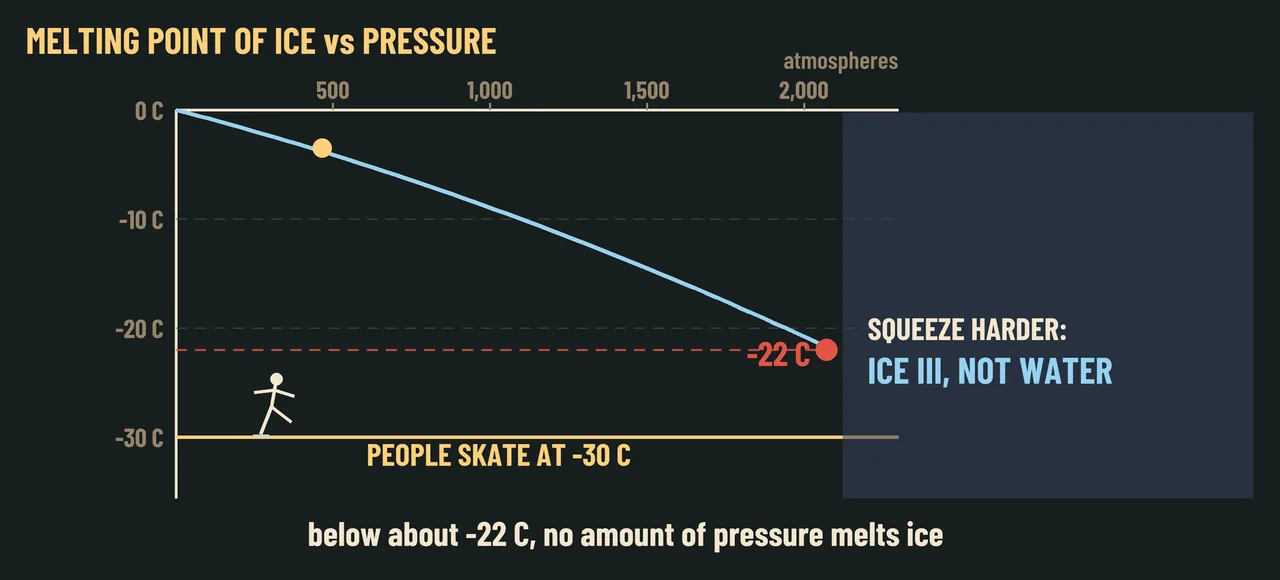
The version most people got: a skate blade is thin, the pressure lowers ice's melting point, and you glide on a film of melted water. It ruled for about a hundred years. Pressure really does lower the melting point, just not by much. Standing on a full skate blade lowers it by about a twentieth of a degree. To melt ice at minus ten on a flat blade you'd need to weigh about ten tonnes, roughly a city bus on skates. People skate happily at minus thirty, and below about minus twenty two no amount of pressure melts ice at all. Also, you slip standing still, in sneakers.
Next suspect: friction heat. In 1939 Bowden and Hughes slid things across ice in a cave in the Swiss Alps and found rubbing really does melt a thin film. But you have to be sliding already. As one ice physicist put it, you only melt the ice behind you.
The wet skin
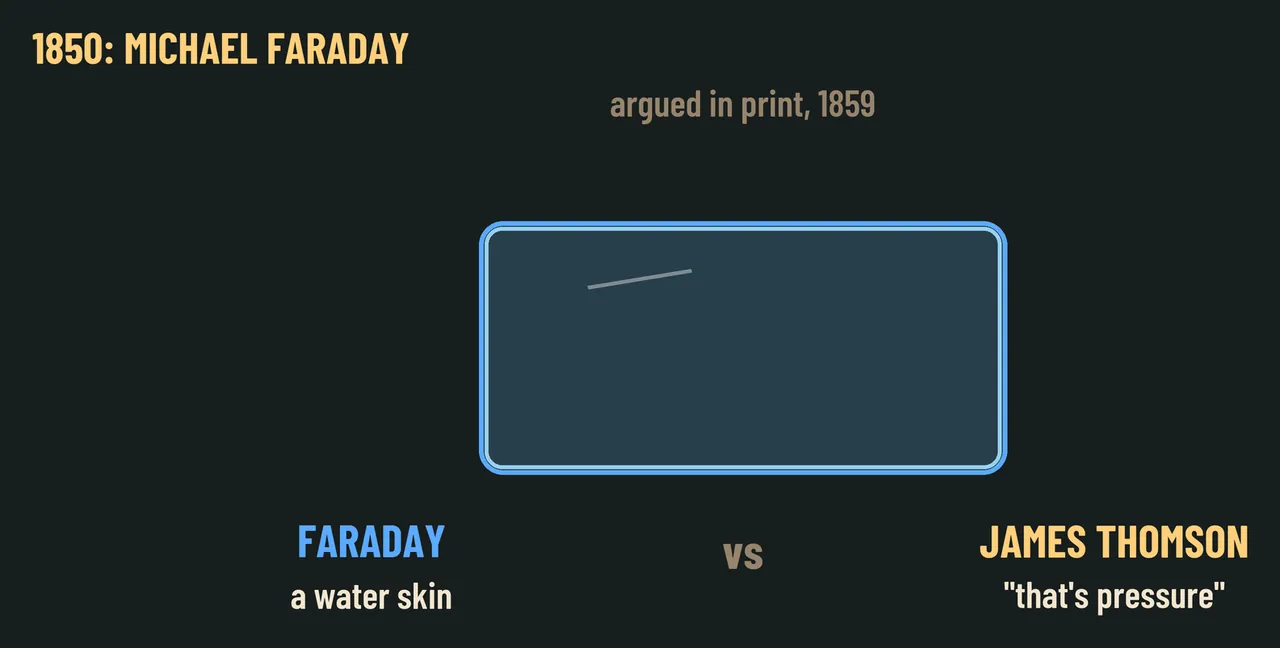
The oldest suspect is the best one. In 1850 Michael Faraday pressed two pieces of ice together and they froze into one. His guess was that ice wears a thin skin of water even below freezing, and he was basically right. The top few layers of molecules aren't locked into the crystal. They're loose, sort of liquid, which is called premelting. Near zero the layer is tens of nanometres thick, thinning as it gets colder. A human hair is tens of thousands of nanometres thick. You are skating on almost nothing.
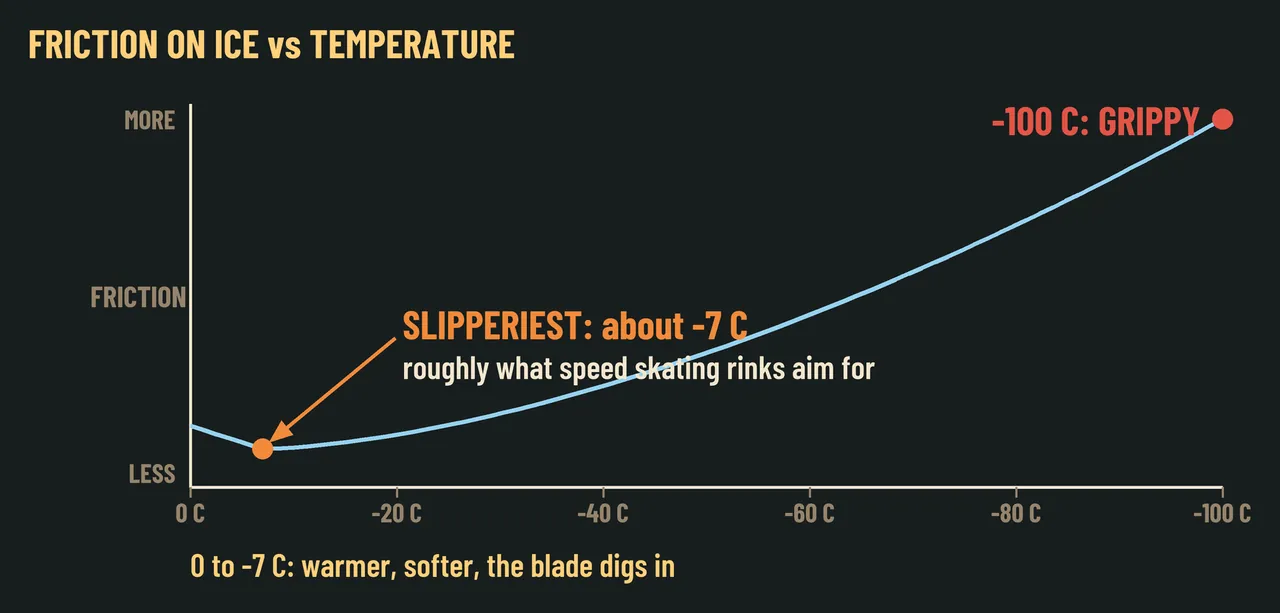
That still isn't the whole story. The video covers the molecules that roll like ball bearings, the temperature where ice is slipperiest, and a newer idea that skips melting altogether. The problem remains open. I find that adorable.