Somewhere near you, in a field, there's a cow pie, and right now something living in it is aiming at the sun. Tomorrow morning it's going to fire. It's a fungus called Pilobolus, and the name means hat thrower, which is the most modest name anyone has ever given a cannon.
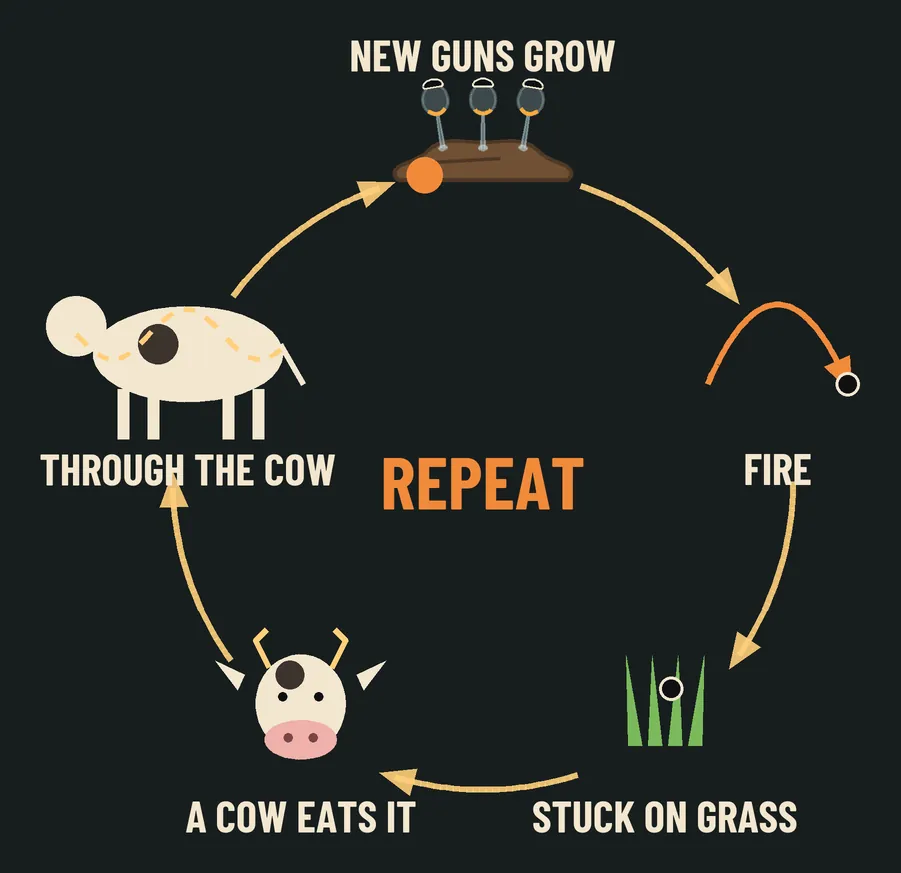
Pilobolus grows on the dung of grass eaters like cows, horses and deer, and its spores only reach the next pile by being eaten. The trouble is that a cow won't graze right next to its own dung. You can see it in any pasture: little patches of long grass nobody touches. So the fungus has to get its spores out of the no eating zone. No legs, no wings. It built artillery.
A gun with an eye
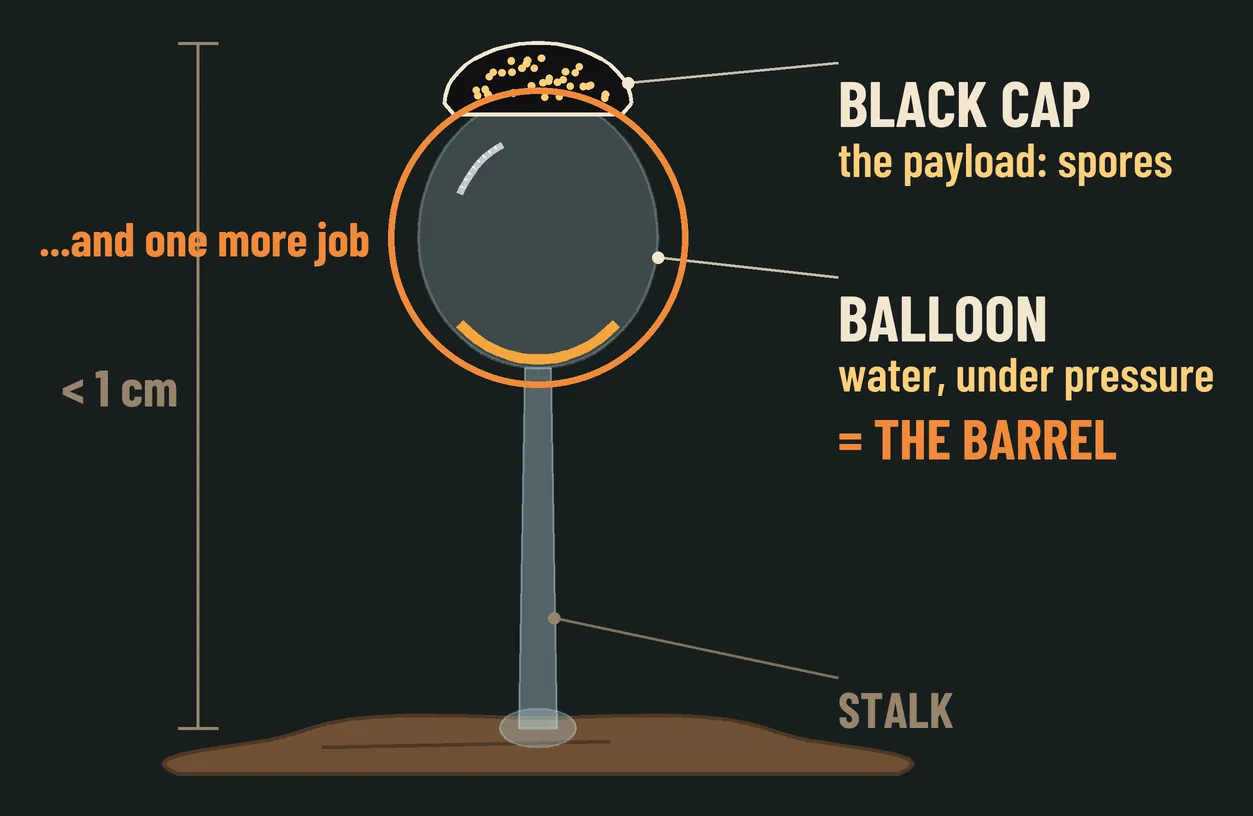
Look closely at an old cow pat and you might see tiny clear stalks, less than a centimetre tall, each topped with a glassy balloon and a black cap. The cap is the payload, packed with spores. The balloon is the barrel, full of water under pressure. It's also a lens: it focuses light onto a band of pigment at its base, and the stalk bends until the bright spot sits in the middle, so the whole gun points straight at the sun. That's where the open sky is.
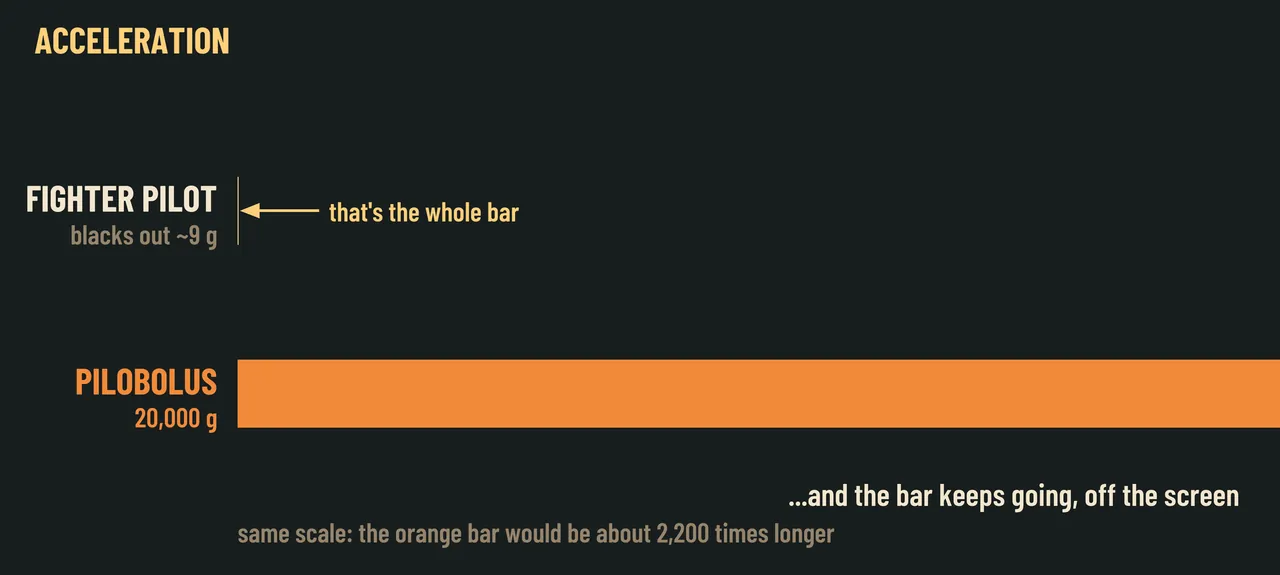
Overnight the pressure builds to several times that of the surrounding air. In the morning the balloon splits under the cap and a jet of water blasts it off. Filmed at high speed, a close cousin's cap reached about 45 kilometres an hour in a tiny fraction of a second, over twenty thousand g. Fighter pilots start blacking out at around nine. The cap flies up to about two and a half metres, sticks to fresh grass, gets eaten, and the cycle starts again.
The video has the diagrams, and the uninvited passengers that ride the cap.